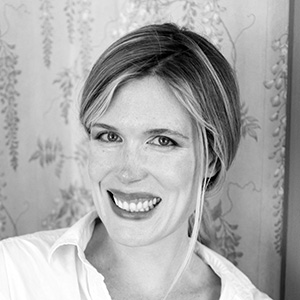
Lily Howard Scott
Teaching Literacy and Childhood General Education '15
As a general education teacher in an ICT classroom, I’d think to myself: what would Sean do? More joy, more flexibility. Get comfortable letting go of the plan and listen to your students. Teach the child, not the curriculum.
Lily Howard Scott graduated from Bank Street with an MSEd in Teaching Literacy and Childhood General Education in 2015. Today, she supports teachers, school leaders, and caregivers with literacy and social and emotional learning. She regularly speaks at national conferences, and her writing has appeared in The Washington Post and Audubon Magazine. Through her consulting work, she partners with a vast network of schools and organizations, including NYSAIS, The 92nd Street Y, The Alliance for Early Childhood, Chapin School, and Park Avenue Synagogue.
Before launching her consulting practice, Lily spent nearly a decade teaching elementary school in both public and independent settings. Her journey started when she began her graduate studies at Bank Street in 2011. She chose the Teaching Literacy and Childhood General Education program because she delighted in young children and because she wanted to help them develop a genuine love of reading.
Lily said, “I knew that I wanted to teach elementary school. To me, young children are the best company because of their inherent bravery, unselfconsciousness, and capacity for silliness, to name just a few things. I also knew that I wanted a strong pedagogical foundation to help my students become enthusiastic readers; to lean into the truth that books are magic. Because there are, aren’t they? There’s a book store in my neighborhood called Books are Magic, and it’s the perfect name because it isn’t an exaggeration: squiggly shapes represent sounds, which in turn come together to make words, which then mingle together to elicit mind movies, connections, and epiphanies that make us feel less alone and transform how we understand ourselves and the world around us.”
During her time as a graduate student, a children’s literature course reshaped how Lily understood what the right book can mean to a child.
“I’ll never forget what my children’s literature professor Judith Leipzig said about pairing a child with a book that mirrors something about an experience they had assumed was theirs alone. She said, ‘A book can feel like a hand holding the child’s hand in the dark.’ Years later, when I read what James Baldwin wrote about exactly this—’You think your pain and your heartbreak are unprecedented in the history of the world, but then you read…the things that tormented me most were the very things that connected me with all the people who were alive, who had ever been alive’—I immediately thought of Judith and that class. I still remember and revisit Judith’s beautiful words: A book can be a hand holding a child’s hand in the dark.”
When working as a general education teacher in an Integrated Co-Teaching (ICT) classroom, Lily relied on her Bank Street training to prioritize her students over rigid academic plans.
She said, “I also think about Sean O’Shea’s class about developmental variations all the time. Sean helped me understand that the core tenets of special education—dialing down the pressure and tailoring curricula to students’ unique strengths, interests, and needs—are actually the tenets of any good education. All children benefit from a flexible, differentiated, asset-based approach to learning. As a general education teacher in an ICT classroom, I’d think to myself: what would Sean do? More joy, more flexibility. Get comfortable letting go of the plan and listen to your students. Teach the child, not the curriculum.”
Her immersive classroom years eventually led Lily to research and explore how intentional teacher language influences a child’s self-talk. This focus permeates her nationwide consulting work, the graduate workshops she teaches through Bank Street’s Continuing Professional Studies, and her recent writing.
In 2025, Lily published The Words That Shape Us (Scholastic) which was selected by UC Berkeley’s Greater Good Science Center as a Top Book for Educators in 2025. In the book, she explains how language can shape how kids think, feel, and function.
“I’ve become fascinated by the idea that language isn’t only a tool for communicating with others, it’s also a tool for more positively regulating and navigating our inner lives,” Lily said. “I believe this truth carries profound implications for the ways in which teachers (and caregivers!) speak to kiddos. Because, of course, the way we talk to young children becomes the way they talk to themselves.”
What’s next for Lily? In 2028, Lily will publish a not-yet-titled picture book from Hachette’s Union Square Kids imprint. It’s inspired by her recent essay in Audubon Magazine about attention and birding.
Lily says, “Over the past 15 years as a teacher, and more recently as a parent of two young children, picture books have opened the door to connection and delight on even the hardest day. I’m still pinching myself that I’ve been given the opportunity to create one of my own. I recall sitting in Judith’s children’s literature class all those years ago, reading books next to the other graduate students, imagining which books might delight certain kiddos in my student teaching placement. It’s hard to believe that this upcoming book may strike a chord with a child I’ll never meet.”