Contact Us
-
Graduate Admissions212-875-4404
-
Program Director, Early Childhood, Childhood, Cross Age, and Advanced Standing General Education (On Campus)212-875-4502
Early Childhood Education (Birth–Grade 2)
MSEd, EdM
-
Program Overview
MSEd, EdM | 33 credits
On Campus or Online
Initial or Professional Certification
Complete in Under 2 YearsDesigned for those who want to teach our youngest learners, this program centers on the development of children from birth through grade 2 and the belief that education begins with deep understanding of the child. Drawing on Bank Street’s long-standing progressive philosophy, you’ll weave disability and inclusive practices throughout your coursework, learning to approach teaching as both an intellectual and reflective practice.
Through careful observation and inquiry, you will learn to create responsive, play-based environments that honor diverse developmental profiles and support children’s emerging skills, relationships, and ways of knowing. Your academic coursework will align with immersive, supervised fieldwork, allowing you to apply and practice research-based inclusive strategies from your first semester. Throughout, our dedicated faculty, advisors, and administrators will provide you with individualized mentorship and guidance so you continually apply theory and research to practice, refining your teaching practice as you prepare to lead diverse and inclusive classrooms with confidence.
In both the on campus and online options, you’ll experience a highly interactive and relationship-centered program, engaging fully in classes built on dialogue, collaboration, and reflection. When you graduate, you join an enduring Bank Street alumni network that fosters ongoing professional connections, mentorship, and leadership opportunities across your career.
If you are seeking dual certification in general and special education, pair this program with the 12-credit Students with Disabilities Early Childhood Education (Birth– Grade 2) Advanced Certification program. You will first complete the master’s program in Early Childhood Education and, upon completion, transition into the Special Education advanced certification program.
In This Program You Will
- Develop a Deep Understanding of Early Childhood Growth: Build a foundation in the rapid cognitive, social, and emotional growth of young children. You will learn to use keen observational skills to understand individual student progress, guide instructional decisions, and design responsive environments tailored to early childhood learners.
- Design Inquiry- and Play-Based Curriculum: Learn to facilitate goal-informed, developmentally appropriate instruction across early literacy, mathematics, and critical thinking. By combining theory with hands-on practice, you will create engaging learning experiences that promote curiosity, exploration, and a lifelong joy for learning.
- Foster Inclusive and Equitable Classrooms: Develop strategies to support learners with a wide range of backgrounds, strengths, and developmental needs. As a changemaker committed to social justice, you will learn to center equity, remove barriers to learning, and advocate for access for all children and families.
- Gain Extensive Supervised Teaching Experience: Integrate theory into daily practice through collaborative learning and hands-on fieldwork. Most students can maintain their current teaching position or obtain a paid teaching position that serves as a fieldwork placement during the program. If you are not already employed, Bank Street will support your placement alongside experienced mentor teachers, allowing you to gain practical experience across various age groups and school settings.
- Partner Meaningfully with Families and Communities: Learn effective strategies to collaborate with families as essential partners in their children’s learning and development. You will build caring, strengths-based relationships that honour diverse identities and build strong home-school connections.
Who Should Apply
- Current and aspiring educators who embrace collaborative learning, reflective inquiry, and culturally responsive practice
- Individuals seeking an initial or professional certification in Early Childhood Education, Birth–Grade 2
We find that the most successful online students are those who thrive in collaborative group work done during synchronous meetings and who are also independently driven to complete asynchronous work on their own time.

-
Admissions & Tuition
This program has the option to begin in the fall.
The Fall 2027 application is currently open.
Application Deadlines
- Applications are reviewed in rounds to ensure you receive a timely decision.
- You will have five business days after the application deadlines to finish providing any missing required materials. Incomplete applications will be moved to the next round for consideration.
- In some cases, applications submitted after the final deadline will be reviewed on a space-available basis.
- We strongly encourage you to submit your application as early as possible. This guarantees the most timely admissions decision and the broadest consideration for scholarships and financial aid.
- If you’re accepted, you will have 3 weeks to respond to our offer of admission.
Fall 2027
Round Application Deadline Materials Deadline Decision Released 1 January 2, 2027 January 7, 2027 February 4, 2027 2 February 1, 2027 February 6, 2027 March 2, 2027 3 March 1, 2027 March 6, 2027 March 29, 2027 Admissions Criteria
For all program options, please review How to Apply for full details on the application process, admissions criteria, and application requirements.
Tuition
At Bank Street, tuition is charged per credit. The Early Childhood Education (Birth–Grade 2) program requires 33 credits for completion. Read more on our Tuition page
Financial Aid
The majority of Bank Street students receive some type of financial aid. We strongly recommend applying early and submitting your FAFSA at the time you apply for the broadest consideration for scholarships and financial aid. Read more on our Financial Aid page
Technology Requirements
Students enrolling in the online options must secure access to the following required technology for all online courses:
- A personal computer with:
- Broadband Internet access
- Speakers, microphone, and camera
- Headphones, if participating from a public or shared space
- An updated version of the Chrome or Firefox browser and a free Zoom account
- A recording device for supervised fieldwork (such as a smartphone, laptop, or iPad) suitable for use in classrooms
These are required components of your program. It is your responsibility to ensure you have access to each item on this list. Bank Street does not provide or lend access to these devices and platforms.
-
Curriculum & Courses
Our Approach
Our curriculum centers on active, inquiry-driven learning that mirrors how children learn best—through exploration, collaboration, and reflection. We engage you in rigorous study of educational theory, human development, and inclusive practice while you apply that learning immediately in classroom settings. Through rich dialogue, purposeful assignments, and collaborative projects, you will refine your ability to think critically, teach responsively, and support diverse learners. By the end of the program, you will have deepened your professional judgment, strengthened your reflective capacities, and grown as an educator ready to lead and innovate in early childhood contexts.
Time Commitment
This program takes under two years to complete.
In the online option, each course typically meets once per week in a live, synchronous online session from 7:00 PM to 9:00 PM ET. In some cases, a class session may be replaced with asynchronous coursework assignments for that week, which are completed on your own schedule and must be submitted by the posted deadlines. Classes are not held on Fridays. Students should plan to dedicate approximately 10 hours per week to program-related study and activities.
In the on-campus option, each course typically meets once per week, either from 4:45 PM to 6:45 PM or 7:00 PM to 9:00 PM ET. Classes are not typically held on Fridays. Depending on a student’s course schedule for that term, you can expect to dedicate approximately 10 hours per week to program-related study and activities. Over the summer, classes typically meet twice a week from 5:15 PM to 9:00 PM ET.
Course Plan
33 Credits Total
Fall Start
First Fall (12 credits) - EDUC507 Language Acquisition and Learning in a Linguistically Diverse Society (3 credits)
- EDUC508 Human Development in Context with a Focus on Early Childhood (3 credits)
- EDUC 930 Supervised Fieldwork/Advisement (6 credits)
Spring (12 credits) - EDUC578 Literacy Development in Early Childhood (3 credits)
- EDUC816 Observing a Child through Family and Cultural Contexts (3 credits)
- EDUC 931 Supervised Fieldwork/Advisement (6 credits)
Summer 1 (2 credits) - EDUC588 Art in Early Childhood or EDUC593 Music in Early Childhood (1 credit)
- EDUC529 Critical Foundations in Education (1 credit)
Summer 2 (3 credits) - EDUC546 Mathematics in Early Childhood (3 credits)
Second Fall (4 credits) - EDUC553 Curriculum Development in Early Childhood (3 credits)
- EDUC549 Science in Early Childhood (1 credit)
- TEWS 500N State Mandated Training: Child Abuse Identification and Reporting (0 credits)
- TEWS 501N State Mandated Training: School Violence Prevention (0 credits)
- TEWS 708N State Mandated Training: Dignity for All Students (0 credits)
- Integrative Master’s Project (0 credits)
-
Supervised Fieldwork
Learning Through Experience and Reflection
Supervised fieldwork, which can be completed as a working teacher or through a student teaching placement, integrates hands-on teaching with intentional reflection, allowing you to see how young children from birth through grade 2 learn through play, relationships, and active exploration. You will engage in ongoing cycles of observation, documentation, planning, teaching, and reflection, developing the skills to study children closely and respond to the wide range of developmental paths and learning styles in early childhood. This experiential approach supports you in creating responsive environments that foster early learning while strengthening your practice as a thoughtful, reflective educator.
If you are a working teacher, you may be able to use your place of work for your yearlong fieldwork experience with the approval of the program director, as long as your classroom serves children from birth to second grade. If you are completing fieldwork as a working teacher, you will need to complete additional field hours with alternate age groups and/or setting types depending on your workplace. Bank Street will work with you to identify a series of times (summer break, spring break, etc.) when you can complete these additional field requirements.
Alongside your fieldwork placements, you will meet each week with your advisor and a small group of peers in a conference designed to support you as you grow into your role as an educator. This is a space where you can bring the real experiences, questions, and challenges that arise in your field placement and explore them openly with others who are learning alongside you. Together, you will reflect on your practice, learn from one another’s perspectives, and support each other through the complexities of teaching. Over time, these conversations help you deepen your understanding of your work, grow in confidence and skill, and build meaningful relationships that become the foundation of your lifelong professional network.
Advisement and Mentorship
At Bank Street Graduate School of Education, your fieldwork is closely supervised through an ongoing advisement process that integrates observation, mentoring, and reflective dialogue. In the online program, you document your teaching through recorded lessons and classroom interactions, which you share with your faculty advisor for review and feedback. In the on-campus option, your advisor will periodically visit your field placement site for observation.
Through these observations and follow-up conversations, your advisor provides individualized guidance, modeling, and support while conferring with you about your teaching practice and experiences in the field. This sustained mentorship helps you navigate challenges, celebrate successes, and deepen your understanding of child-centered, equitable teaching while developing practical skills, professional confidence, and the ability to advocate for all children while addressing their individualized needs in collaborative, inclusive settings.
-
Certification & Careers
Certification
When you successfully complete the program, you will be eligible for New York State certification in Early Childhood Education, Birth–Grade 2, provided you complete all other State certification requirements. Read more on our Certification page
Careers
After graduation, students secure head, associate, or assistant teacher positions in public, charter, and independent schools in New York City and beyond with children from birth through grade 2. Additionally, students who are currently in associate or assistant teacher positions can move to head teacher positions. Head teachers who continue in their positions often develop teacher/leadership roles in public, charter, or independent schools.
As a student at Bank Street, you will have full access to our robust Career Services, including the CareerConnect job site, job fairs and workshops, and connections to our alumni network nationwide.
-
Faculty
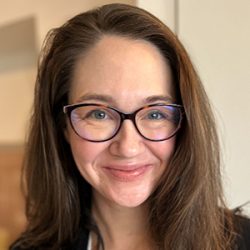 Lauren Bokaer, EdDSupervised Fieldwork Advisorlbokaer@bankstreet.edu
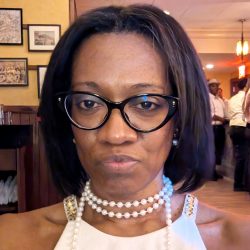 Mila Costa, PhDCourse Instructor & Supervised Fieldwork Advisormcosta@bankstreet.edu
 Pamela JonesSupervised Fieldwork Advisor & Course Instructorpjones@bankstreet.edu 212-875-4660
 Abby Kerlin, MEd, MSProgram Director, Early Childhood, Childhood, Cross Age, and Advanced Standing General Education (On Campus)akerlin@bankstreet.edu 212-875-4502
 Ellen McCrumAdjunct Instructoremccrum@bankstreet.edu
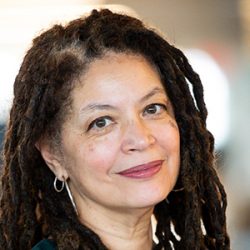 Kim McLeveighn, MSEdDirector of Student Learning Support, Supervised Fieldwork Advisor, and Course Instructorkmcleveighn@bankstreet.edu
 Soyoung ParkDirector, Early Childhood and Childhood Special Education Programs OnlineAffiliated Faculty, Straus Center for Young Children & Familiesspark2@bankstreet.edu
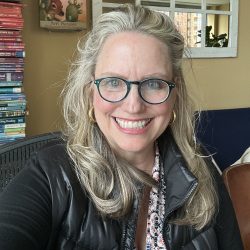 Susie RolanderContent Specialist, Supervised Fieldwork Advisor, Course Instructorsrolander@bankstreet.edu 917-751-3415
 Cristian R. Solorza, PhDCourse Instructor & Supervised Fieldwork Advisorcsolorza@bankstreet.edu 212-875-4553
 Deborah B. VilasProgram Director, Child Lifedvilas@bankstreet.edu
Alumni Spotlight: Steven Mercado
Early Childhood General Education alum Steven Mercado, former Bank Street School for Children teacher, shares more about Bank Street’s culture of constant learning.
-
TranscriptTranscript The main culture that seems to explain the school is a culture of constant learning. The professors that are teaching here are very willing to hear from us, the graduate school students, and learn from us. Think of the community like a sponge in which everything that is being said, everything that's being done, even if it's in a particular classroom or specific the section of the community, everything's being absorbed.