Contact Us
-
Graduate Admissions212-875-4404
-
Program Director, Bilingual/Dual Language, TESOL, and Childhood Special Education Programs
Students with Disabilities All Grades (Pre-K–12)
MSEd, EdM
-
Program Overview
MSEd, EdM | 38 credits
On Campus or Online
Initial or Professional Certification
Complete in under 2 yearsTransform your passion for equity into a career of profound impact with our master’s degree in Students with Disabilities (All Grades). As you earn your degree in special education, Bank Street will prepare you to become a designer of inclusive learning environments that honor the full humanity of every child. You will learn to build on a student’s strengths using asset-based pedagogies to advocate for families and transform your learning environment into one that is truly accessible and affirming for all.
Your academic coursework, which will span multiple age bands, will be coupled with immersive, supervised fieldwork that enables you to apply and practice what you’re learning right from your first semester. Our dedicated faculty, advisors, and administrators will guide you with individualized mentorship while you continually apply theory and research to practice, refine your teaching, and prepare to lead classrooms with confidence. Our program is highly interactive and relationship-centered, with active student engagement in classes built on dialogue, collaboration, and reflection. When you graduate, you join an enduring Bank Street network that fosters ongoing professional connections, mentorship, and leadership opportunities across your career.
Note that if you are interested in an accelerated path to classroom teaching, you may be eligible to receive a New York State internship certificate when you are halfway through the program. This temporary certificate allows you to be hired as the teacher of record and earn a salary while finishing the rest of the program.
In This Program, You Will
- Bridge Theory and Practice with Seasoned Mentorship: Engage in a full 10-month academic year of supervised fieldwork, allowing you to build deep connections between coursework and real-world classroom dynamics. You will collaborate with practitioners and advisors who bring real-world, experience-based learning into your courses and fieldwork, emphasizing adaptability, problem-solving, and a joy for learning.
- Champion Social Justice, Equity, and Advocacy: Analyze the historical and systemic roots of institutional racism, ableism, and linguicism to become a transformative advocate for students and families. Prepare to become a changemaker who leads, influences, and innovates while centering equity and access for all children and families within a community that honors diverse identities, centers strengths, values peer collaboration, and is rooted in strong, caring relationships.
- Develop Specialized Instruction and Responsive Pedagogy: Gain expertise in the legal and pedagogical frameworks of special education, including the development and implementation of IFSPs, IEPs, and 504 plans. You will learn to design accessible, responsive, child-centered environments and curricula that honor every student’s unique developmental profile, helping every child reach their full potential.
- Design Inclusive Curriculum and Adopt an Asset-Based Lens: Develop sophisticated skills in differentiation, multimodal assessment, and specialized instructional supports tailored to your chosen age band. By partnering with families, you will learn to utilize an asset-based lens that respects and uplifts each child’s diverse identity.
- Collaborate Effectively: Cultivate a collaborative disposition to work alongside families, related service providers, and school administrators to optimize educational outcomes.
- Benefit from Flexible Fieldwork and Student Teaching Support: Experience a program designed to meet the needs of today’s educators. Most students can maintain their current teaching position or obtain a paid teaching position that serves as a fieldwork placement during the program. If you are not already employed, Bank Street will match you with mentor teachers for your supervised fieldwork, allowing you to expand your reach by working with different ages and across a range of school settings under the guidance of experienced alumni.
Who Should Apply
- Aspiring Special Educators: Individuals seeking a comprehensive foundation in progressive education and a path to dual certification or specialized expertise in supporting students with disabilities.
- Working Teachers: Current associate teachers, charter school educators, or professionals in special education schools who want to earn their master’s degree while continuing to work in their current paid roles.
- Career Changers: Professionals from other fields who are committed to social justice and wish to transition into a high-needs area of education.
We find that the most successful online students are students who thrive in collaborative group work done during synchronous meetings and who are also independently driven to complete asynchronous work on their own time.
-
Admissions & Tuition
This program has the option to begin in the fall.
The Fall 2027 application is currently open.
Application Deadlines
- Applications are reviewed in rounds to ensure you receive a timely decision.
- You will have five business days after the application deadlines to finish providing any missing required materials. Incomplete applications will be moved to the next round for consideration.
- In some cases, applications submitted after the final deadline will be reviewed on a space-available basis.
- We strongly encourage you to submit your application as early as possible. This guarantees the most timely admissions decision and the broadest consideration for scholarships and financial aid.
- If you’re accepted, you will have 3 weeks to respond to our offer of admission.
Fall 2027
Round Application Deadline Materials Deadline Decision Released 1 January 2, 2027 January 7, 2027 February 4, 2027 2 February 1, 2027 February 6, 2027 March 2, 2027 3 March 1, 2027 March 6, 2027 March 29, 2027 Admissions Criteria
No prior teaching certification is necessary for this program.
In addition to meeting other admissions requirements, applicants for the Students with Disabilities, All Grades (Pre-K–12) program will need to meet New York State requirements for the “content core” of the liberal art & science prerequisites, which includes the following course subjects taken at the undergraduate level with a grade of “C” and above:
- Social Sciences (6 credits)
- Science (6 credits)
- Math (6 credits)
- English Language Arts (6 credits)
Please review How to Apply for full details on the application process, admissions criteria, and application requirements.
Tuition
At Bank Street, tuition is charged per credit. The Students with Disabilities All Grades (Pre-K–12) Program requires 38 credits for completion. Read more on our Tuition page
Financial Aid
The majority of Bank Street students receive some type of financial aid. We strongly recommend applying early and submitting your FAFSA at the time you apply for the broadest consideration for scholarships and financial aid. Read more on our Financial Aid page
Technology Requirements
Students must secure access to the following required technology for all online courses:
- A personal computer with:
- Broadband Internet access
- Speakers, microphone, and camera
- Headphones, if participating from a public or shared space
- An updated version of the Chrome or Firefox browser and a free Zoom account
- A recording device for supervised fieldwork (such as a smartphone, laptop, or iPad) suitable for use in classrooms
These are required components of your program. It is your responsibility to ensure you have access to each item on this list. Bank Street does not provide or lend access to these devices and platforms.
-
Curriculum & Courses
Our Approach
Our curriculum centers on active, inquiry-driven learning that mirrors how children learn best—through exploration, collaboration, and reflection. We engage you in rigorous study of educational theory, human development, and inclusive practice while you apply that learning immediately in classroom settings. Through rich dialogue, purposeful assignments, and collaborative projects, you will refine your ability to think critically, teach responsively, and support diverse learners. By the end of the program, you will have deepened your professional judgment, strengthened your reflective capacities, and grown as an educator ready to lead and innovate.
Time Commitment
This program takes under two years to complete.
In the online options, each course typically meets once per week in a live, synchronous online session from 7:00 PM to 9:00 PM ET. In some cases, a class session may be replaced with asynchronous coursework assignments for that week, which are completed on your own schedule and must be submitted by the posted deadlines. Classes are not held on Fridays. Students should plan to dedicate approximately 10 hours per week to program-related study and activities.
In the on-campus option, each course typically meets once per week, either from 4:45 PM to 6:45 PM or 7:00 PM to 9:00 PM ET. Classes are not typically held on Fridays. Depending on a student’s course schedule for that term, you can expect to dedicate approximately 10 hours per week to program-related study and activities. Over the summer, classes typically meet twice a week from 5:15 PM to 9:00 PM ET.
Course Plan
38 Credits Total
Fall Start
First Fall (12 credits) - EDUC507 Language Acquisition and Learning in a Linguistically Diverse Society (3 credits)
- EDUC508 Human Development in Context with a Focus on Early Childhood or EDUC509 Human Development in Context with a Focus on Elementary and Adolescence (3 credits)
- EDUC 930 Supervised Fieldwork/Advisement (6 credits)
First Spring (9 credits) - EDUC578 Literacy Development in Early Childhood or EDUC579 Literacy Development in Childhood or EDUC580 Literacy Development in Adolescence (3 credits)
- EDUC 931 Supervised Fieldwork/Advisement (6 credits)
- TEWS 500N State Mandated Training: Child Abuse Identification and Reporting (0 credits)
- TEWS 501N State Mandated Training: School Violence Prevention (0 credits)
- TEWS 708N State Mandated Training: Dignity for All Students (0 credits)
Summer 1 (2 credits) - EDUC529 Critical Foundations in Education (1 credit)
- EDUC588 Art in Early Childhood or
- EDUC589 Art in Childhood or
- EDUC593 Music in Early Childhood or
- EDUC594 Music in Childhood (1 credit)
Summer 2 (6 credits) - EDUC546 Mathematics in Early Childhood or EDUC547 Mathematics in Childhood or EDUC548 Mathematics in Adolescence (3 credits)
- EDUC608 Collaboration and Implementation of Specialized Instructional Programs (3 credits)
Second Fall (4 credits) - EDUC553 Curriculum Development in Early Childhood or EDUC554 Curriculum Development in Childhood or EDUC555 Curriculum Development in Adolescence (3 credits)
- EDUC549 Science in Early Childhood orEDUC550 Science in Childhood (1 credit)
- Integrative Master’s Project (0 credits)
Second Spring (5 credits) - EDUC896 Assessment, Differentiation, and Instructional Supports for Early Childhood Students with Disabilities or EDUC897 Assessment, Differentiation, and Instructional Supports for Elementary Students with Disabilities or EDUC898 Assessment, Differentiation, and Instructional Supports for Adolescent Students with Disabilities (3 credits)
- EDUC 629 Supporting Autistic Students in Inclusive and Special Education Settings (1 credit)
- EDUC 525 Assistive Technology as a Tool for Educational Access (1 credit)
- Integrative Master’s Project (0 credits)
-
Supervised Fieldwork
Learning Through Experience and Reflection
Supervised fieldwork, which can be completed as a working teacher or through student teaching placements, integrates hands-on teaching with intentional reflection, enabling you to see first-hand how children and adolescents learn and how inclusive practices function in classrooms and are tailored to provide the individual attention students need. You will engage in cycles of observation, planning, teaching, assessment, and reflection, which foster critical thinking and professional judgment. This experiential approach ensures that learning is active, grounded in evidence, and responsive to each child’s diverse developmental needs.
If you are a working teacher, you may be able to use your place of work for your yearlong fieldwork experience with the approval of the program director, as long as your classroom serves children with disabilities, is between pre-K to 12th grade, and your setting meets degree and certification requirements. If you are completing fieldwork as a working teacher, you will need to complete additional field hours with alternate age groups and/or setting types. Bank Street will work with you to identify a series of times (weekends, spring break, etc.) when you can complete these additional field requirements.
Alongside your fieldwork placements, you will meet each week with your advisor and a small group of peers in a conference group designed to support you as you grow into your role as an educator. This is a space where you can bring the real experiences, questions, and challenges that arise in your field placement and explore them openly with others who are learning alongside you. Together, you will reflect on your practice, learn from one another’s perspectives, and support each other through the complexities of teaching. Over time, these conversations help you deepen your understanding of your work, grow in confidence and skill, and build meaningful relationships that become the foundation of your lifelong professional network.
Advisement and Mentorship
At Bank Street Graduate School of Education, your fieldwork is closely supervised through an ongoing advisement process that integrates observation, mentoring, and reflective dialogue. In the online program, you document your teaching through recorded lessons and classroom interactions and/or virtual visits, which you share with your faculty advisor for review and feedback. In the on-campus option, your advisor will periodically visit your field placement site for observation.
Through these observations and follow-up conversations, your advisor provides individualized guidance, modeling, and support while conferring with you about your teaching practice and experiences in the field. This sustained mentorship helps you navigate challenges, celebrate successes, and deepen your understanding of child-centered, equitable teaching while developing practical skills, professional confidence, and the ability to advocate for all children while addressing their individualized needs in collaborative, inclusive settings.
-
Certification & Careers
Certification
When you successfully complete the program, you will receive a master’s degree and be eligible for New York State Certification in Students with Disabilities, All Grades, provided you complete all other state certification requirements. Read more on our Certification page
Professional teaching certification from New York State is very portable to other states. To learn more, please visit our Outside of New York disclosure website page.
Careers
After graduation, students pursue a range of career opportunities including:
- Teaching in special education or inclusion classrooms in public, charter, or independent schools in grades pre-K through 6 and in inclusion classrooms, grades 7 through 12
- Working as an early-interventionist in social service or education-based agencies, as well as in hospitals, non-profit organizations, or daycare settings
- Working one-on-one as a Special Education Itinerant Teacher (SEIT) in home, classroom, and daycare settings
- Designing and assessing educational programming, curriculum, and policy
- Pursuing doctoral degree programs
As a student at Bank Street, you will have full access to our robust Career Services, including the CareerConnect job site, job fairs and workshops, and connections to our alumni network nationwide.
-
Faculty
 Pamela JonesSupervised Fieldwork Advisor & Course Instructorpjones@bankstreet.edu 212-875-4660
 Rae Leeper, EdDProgram Director, Early Childhood Special Education (On Campus)rleeper@bankstreet.edu
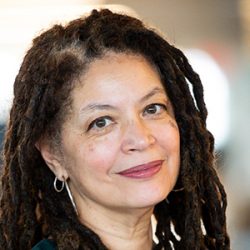 Kim McLeveighn, MSEdDirector of Student Learning Support, Supervised Fieldwork Advisor, and Course Instructorkmcleveighn@bankstreet.edu
 Sean O’SheaSupervised Fieldwork Advisor & Course Instructorsoshea@bankstreet.edu 212-875-4486
 Soyoung ParkDirector, Early Childhood and Childhood Special Education Programs OnlineAffiliated Faculty, Straus Center for Young Children & Familiesspark2@bankstreet.edu
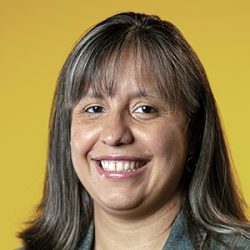 Elizabeth Silva DiazProgram Director, Bilingual/Dual Language, TESOL, and Childhood Special Education Programsesilva@bankstreet.edu
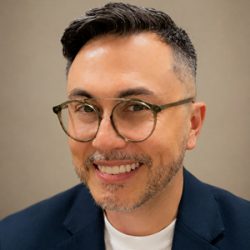 Cristian R. Solorza, PhDCourse Instructor & Supervised Fieldwork Advisorcsolorza@bankstreet.edu 212-875-4553
 Deborah B. VilasProgram Director, Child Lifedvilas@bankstreet.edu