Contact Us
-
Graduate Admissions212-875-4404
-
Content Specialist, Supervised Fieldwork Advisor, Course Instructor917-751-3415
-
Course Instructor & Supervised Fieldwork Advisor212-875-4549
-
Adjunct Faculty
Reading and Literacy: Inclusive Teaching (On Campus and Online)
MSEd
-
Program Overview
MSEd
Hybrid | 30 credits
Complete in 20 months (includes summer)Our master’s degree program in Reading and Literacy: Inclusive Teaching leads to professional pre-K–12 literacy certification and prepares you to expand your impact across grade levels while deepening your understanding of how children learn to read and write. Designed for certified teachers, the program prepares you to become a reading specialist, literacy coach, or teacher-leader who designs and implements literacy curriculum grounded in culturally responsive pedagogy. Through a blend of on-campus and online learning, you will engage with current research in literacy development and the sciences of reading, building your knowledge and confidence in your ability to reach all learners—from early childhood through high school—in meaningful and transformative ways.
Supervised fieldwork is integrated into summer and spring coursework, giving you opportunities to apply your learning about literacy development while working with children in clinical settings. During the summer placement, a faculty member will observe your instruction and provide individualized coaching. You may complete your fieldwork in your own classroom in the spring and during the summer, in a partner New York City school where you will be placed. Throughout the program, faculty, advisors, and administrators offer personalized mentorship to help you connect theory and research to your teaching, strengthening your practice and preparing you to lead with confidence.
The program is highly interactive and relationship-centered, with classes built on dialogue, collaboration, and reflection. When you graduate, you will join an enduring Bank Street alumni network that supports ongoing professional connections, mentorship, and leadership opportunities throughout your career.
In This Program You Will
- Integrate reading theory and research with evidence-based teaching methods
- Develop expertise in oral language development, phonemic awareness, decoding and phonics, reading comprehension, and writing
- Implement assessments designed to guide intervention and differentiated instruction
- Use literature reflective of children’s multiple and intersecting identities to support culturally and developmentally responsive practices
- Explore the larger socio-cultural contexts of literacy education
- Critically analyze common literacy programs used in schools
- Engage in in-person and online coursework and learning experiences
What Makes Bank Street and This Program Distinctive
- Integration of Theory and Practice: You will collaborate with practitioners and advisors who bring real-world, experience-based learning into your courses and intensive fieldwork, emphasizing adaptability, problem-solving, and a joy for learning.
- Responsive and Differentiated Pedagogy: You will learn to design accessible curricula and partner with families to help every child reach their full potential.
- Collaborative Learning Model: You will join a community that honors diverse identities, centers strengths, values peer collaboration, and is rooted in strong, caring relationships.
- Commitment to Equity and Advocacy: We prepare you to be a changemaker who leads, influences, and innovates while centering equity and access for all children and families.
- Flexibility for Working Professionals: Designed to meet the needs of today’s educators, our program is structured so most students can maintain their current teaching position or obtain a paid teaching position that can serve as a fieldwork placement during the program.
- Student Teaching Support: If you are not already employed, Bank Street will find fieldwork placements for you. You will have the opportunity to work with different ages and across a range of school settings under the guidance of an experienced mentor teacher, many of whom are Bank Street graduates.
Who Should Apply
This hybrid master’s degree program is for individuals who hold a New York State classroom teaching certification in Early Childhood or Childhood General or Special Education and leads to professional certification as an all-grades literacy specialist. If you are looking to strengthen your instructional practice, support all learners more effectively, and ground your teaching in research and evidence-based methods, this program will meet you where you are and help you grow.
You should consider applying if you are interested in becoming a reading specialist, literacy coach, or school-based literacy leader, or if you want to take on a more advanced role in supporting students’ reading and writing development. This program is also a strong fit if you are committed to culturally responsive teaching, want to better support multilingual and neurodiverse learners, and are eager to connect theory with practice through hands-on fieldwork in school settings.
-
Admissions & Tuition
Admissions Criteria
In addition to meeting other admissions requirements, to be eligible for admission to the Reading & Literacy: Inclusive Teaching program you must:
- Hold a valid New York State teaching certification in Childhood Education, Grades 1-6 or Early Childhood Education, Birth-Grade 2, or Students with Disabilities in any age band.
Please review How to Apply for full details on the application process, admissions criteria, and application requirements.
Tuition
At Bank Street, tuition is charged per credit. The Reading & Literacy: Inclusive Teaching program requires 30 credits for completion. Read more on our Tuition page
Financial Aid
The majority of Bank Street students receive some type of financial aid. We strongly recommend applying early and submitting your FAFSA at the time you apply for the broadest consideration for scholarships and financial aid. Read more on our Financial Aid page
Technology Requirements
Students enrolling in the online options must secure access to the following required technology for all online courses:
- A personal computer with:
- Broadband Internet access
- Speakers, microphone, and camera
- Headphones, if participating from a public or shared space
- An updated version of the Chrome or Firefox browser and a free Zoom account
- For Supervised Fieldwork: A recording device (such as a smartphone, laptop, iPad, or camcorder) suitable for use in classrooms
These are required components of your program. It is your responsibility to ensure you have access to each item on this list. Bank Street does not provide or lend access to these devices and platforms.
-
Curriculum & Courses
Our Approach
Our curriculum centers on active, inquiry-driven learning that mirrors how children learn best—through exploration, collaboration, and reflection. We engage you in rigorous study of educational theory, human development, and inclusive practice while you apply that learning immediately in classroom settings. Through rich dialogue, purposeful assignments, and collaborative projects, you will refine your ability to think critically, teach responsively, and support diverse learners. By the end of the program, you will have deepened your professional judgment, strengthened your reflective capacities, and grown as an educator ready to lead and innovate.
Time Commitment
Some classes are conducted online, while others take place on campus. Online courses typically meet once per week for a live, synchronous session from 7:00 PM to 9:00 PM ET. Occasionally, a live session may be replaced with asynchronous coursework, which you can complete on your own schedule as long as you meet the posted deadlines.
On-campus courses typically meet once per week, either from 4:45 PM to 6:45 PM ET or from 7:00 PM to 9:00 PM ET. Classes are not scheduled on Fridays. Students should plan to dedicate approximately 10 hours per week to program-related study and activities.
Course Plan
First Fall (6 credits)
- EDUC 858 Teaching Writing Across the Grades (3 credits)
- EDUC 564 Literature and Emergent Literacy in the Primary Grades (3 credits)
First Spring (6 credits)
- EDUC 577 Approaches to Teaching Decoding to Diverse Learners (3 credits)
- EDUC 566 Teaching Comprehension Through Literature in the Upper Elementary and Secondary Grades (3 credits)
Summer 1 (3 credits)
- EDUC 860 Assessment and Instruction in Teaching Literacy to Children with Language and Learning Disabilities (3 credits)
Summer 2 (3 credits)
- EDUC 874 Clinical Teaching Summer Practicum in Assessment and Instruction (3 credits)
Second Fall (6 credits)
- EDUC 562 Teaching Literacy Across the Content Areas in All Grades (3 credits)
- EDUC 875 Clinical Teaching Practicum in Teaching Literacy Across the Content Areas (3 credits)
Second Spring (6 credits)
- EDUC 876 Integrated Master’s Project Seminar and Advisement (3 credits)
- EDUC 862 Assessment, Diagnosis, and Evaluation of Children with Disabilities (3 credits)
-
Supervised Fieldwork
Learning Through Experience and Reflection
Your fieldwork will occur in the context of two course experiences in the summer and spring, and will support you in applying what you are learning about literacy development to clinical work with children. During the summer placement, you will get support from a faculty member who will observe your practice with children and provide individualized coaching.
Working teachers and assistants (in approved settings) may use their own classrooms for their spring fieldwork setting. Candidates can also be placed by Bank Street as student teachers with experienced teacher mentors. Bank Street organizes the summer student teaching placements, during which you will get support from a faculty member who will observe your practice with children and provide individualized coaching.
Advisement and Mentorship
Throughout the program, you will have many observations and follow-up conversations where your advisor provides individualized guidance, modeling, and support while conferring with you about your practice and experiences in the field. This sustained mentorship helps you navigate challenges, celebrate successes, and deepen your understanding of child-centered, equitable teaching while developing practical skills, professional confidence, and the ability to advocate for all children while addressing their individualized needs in collaborative, inclusive settings.
-
Certification & Careers
Certification
When you successfully complete the program, you will receive a master’s degree and be eligible for the New York State professional certification in Literacy–All Grades (Pre-K-12), provided you complete all other state certification requirements. Read more on our Certification page
Professional teaching certification from New York State is very portable to other states. To learn more, please visit our Outside of New York disclosure website page.
Careers
After graduation, students pursue a range of career opportunities including:
- Earning a higher salary with an additional certification
- Teaching as a reading and literacy specialist, or working as a reading intervention teacher in schools, supplemental programs, and in private practice
- Working as a literacy coach or a school-based literacy leader to help deepen literacy practice for other teachers
- Teaching in classrooms with increased depth in literacy across grade levels
As a student at Bank Street, you will have full access to our robust Career Services, including the CareerConnect job site, job fairs and workshops, and connections to our alumni network nationwide.
-
Faculty
 Clio BodieAdjunct Course Instructorcbodie@bankstreet.edu
 Xiania FosterAdjunct Facultyxfoster@bankstreet.edu
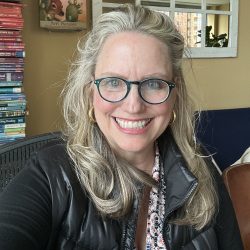 Susie RolanderContent Specialist, Supervised Fieldwork Advisor, Course Instructorsrolander@bankstreet.edu 917-751-3415
 Marylen Townley MassenAdjunct Course Instructormtownleymassen@bankstreet.edu
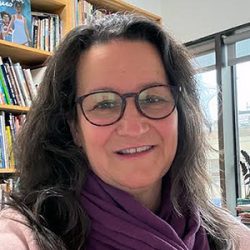 Mollie Welsh Kruger, EdDCourse Instructor & Supervised Fieldwork Advisormwelshkruger@bankstreet.edu 212-875-4549