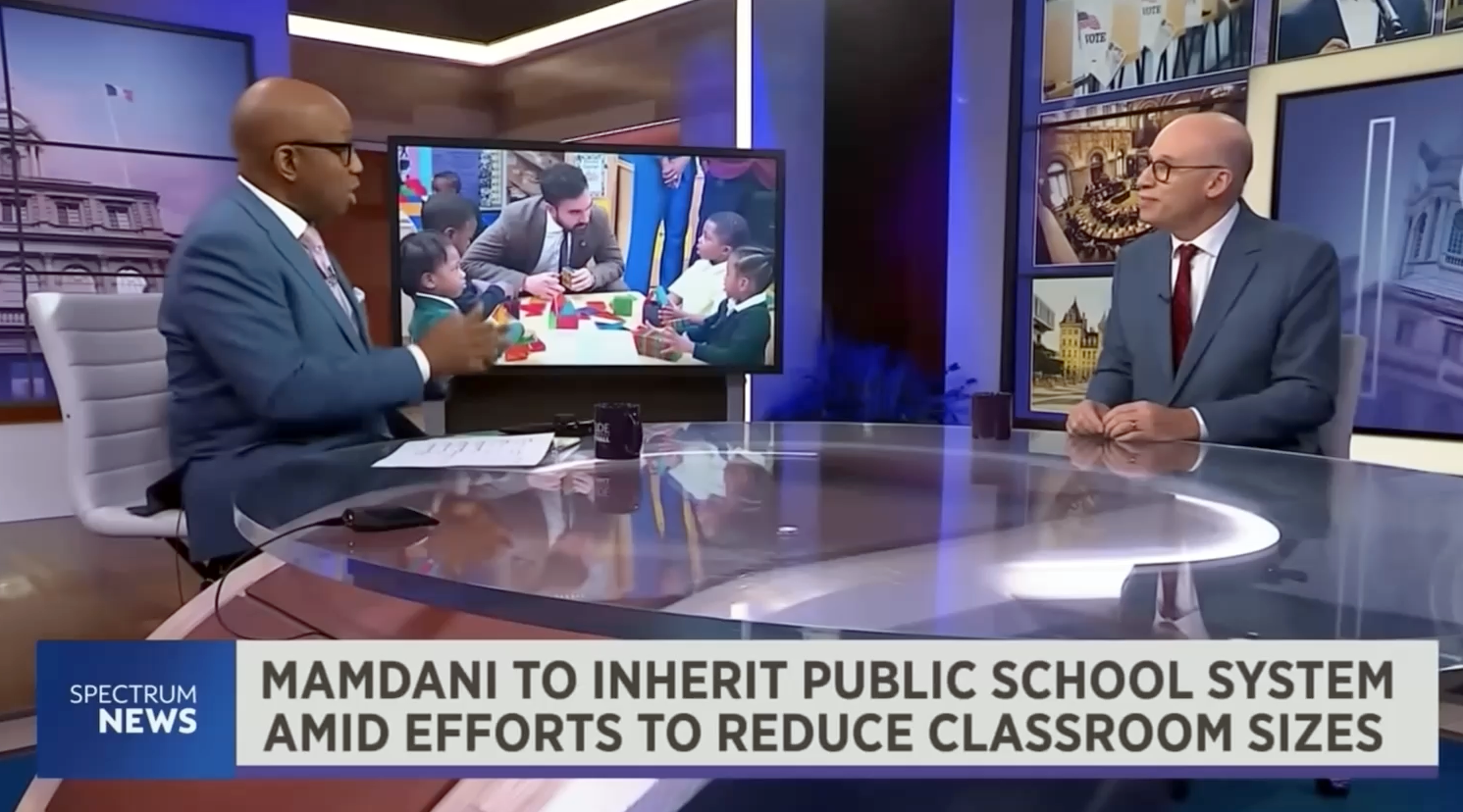
In a recent appearance on NY1’s Inside City Hall, Bank Street President Shael Polakow-Suransky joined the conversation about New York City’s changing education landscape. While there is a lot of buzz about the new “universal child care” agenda, Shael brought the focus back to what matters most: the quality of the connection between a teacher and a child.
Drawing on his experience as a former NYC Deputy Schools Chancellor, Shael made a compelling case: “Universality” is a great goal, but it only works if the interactions happening inside those classrooms are meaningful, supportive, and grounded in expertise.
It’s All About the First 1,000 Days
Why is early childhood so critical? It’s all in the science. Research shows that during the first three years of life, a child’s brain is growing at an explosive rate—forming more than one million neural connections every single second. The best programs do not drill toddlers and two-year-olds on letters or numbers, but instead are built on warm, responsive relationships. Early childhood educators pair consistent routines with hands-on exploration of new and familiar materials. They partner closely with families, engaging in regular conversations about shared goals for growth. Behind it all are opportunities for leadership and coaching support that helps educators get better at their craft
With this approach, Shael argues, all children can develop supportive, responsive relationships with parents and caregivers during early childhood. This can establish in them a strong foundation for future learning.
Training Teachers as “Clinical Experts”
Since the first years of life are so important, the people in the room with our children need to be experts. Shael highlighted Bank Street’s Early Childhood Education and specialized Infant and Family Development and Early intervention master’s degree programs as the “gold standard” for preparing these professionals.
So, what does that specialized training actually look like?
- A Deep Dive into Infancy: Our educators study development from prenatal through 3 years of age (and beyond), highlighting the specific social-emotional needs of children under 3.
- Supporting the Whole Family: We know that a family is a child’s first teacher. Our students learn how to partner with parents and caregivers in schools, clinics, and at home.
- Learning by Doing (with a Coach!): Much like a medical residency, our teachers-in-training participate in intensive, year-long supervised fieldwork. This “reflective practice” helps our students learn who they are in the lives of children, families, and colleagues as they become more curious, self-aware, and creative problem solvers.
Building a System with Dignity
Shael cautioned that simply “counting seats” to reach universal access isn’t enough. The real finish line is ensuring every infant and toddler has a “sensitively attuned caregiver.”
Through the work of the Bank Street Education Center, we are helping the city scale these high-quality models and are working with educators to strengthen responsive classroom environments with an emphasis on child agency, family engagement, and culturally responsive practice. Leveraging Bank Street’s longstanding expertise in early childhood and knowledge of research-based practices, we are helping to develop transformative learning settings that better meet the academic and social-emotional needs of New York City’s children.
As Shael put it, when we give educators the training they deserve, “the city can move beyond affordability to true equity, transforming toddlers into lifelong problem-solvers.”
Want to see the full conversation? Check out Shael’s interview on Inside City Hall here: Shael Polakow-Suransky on the Future of NYC Education